A Normal Lost Phone
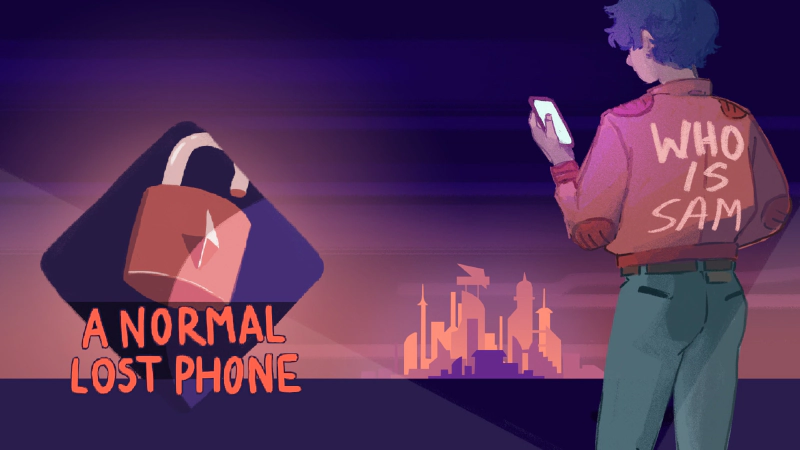
Keeping the theme of epistolary narrative indies going, after playing Blippo+ and Hypnospace Outlaw I thought it would be interesting to install 2017’s “A Normal Lost Phone” on my regular, not-lost phone.
Epistolary?
I learned a new word last year, “epistolary”.
Originally “a novel told through letters written between characters” - a great modern example of which would be “This Is How You Lose The Time War”:
An anime stan who goes by ‘Bigolas Dickolas’ on Twitter turned a queer sci-fi novel into a bestseller with one tweet. Now, they’re hoping the same good fortune can be extended to their favorite manga.
Business Insider, May 11, 2023
https://www.businessinsider.com/bigolas-dickolas-wolfwood-trigun-interview-time-war-2023-5?op=1
“Epistolary” has expanded to broadly be understood as “tales told in ephemera” - the literary equivalent to “found footage” in film.
So, the interstitials in Watchmen? You know, where you’d stop reading a comic book for a while and instead read a newspaper article or magazine article about some superhero history? That’s epistolary storytelling.
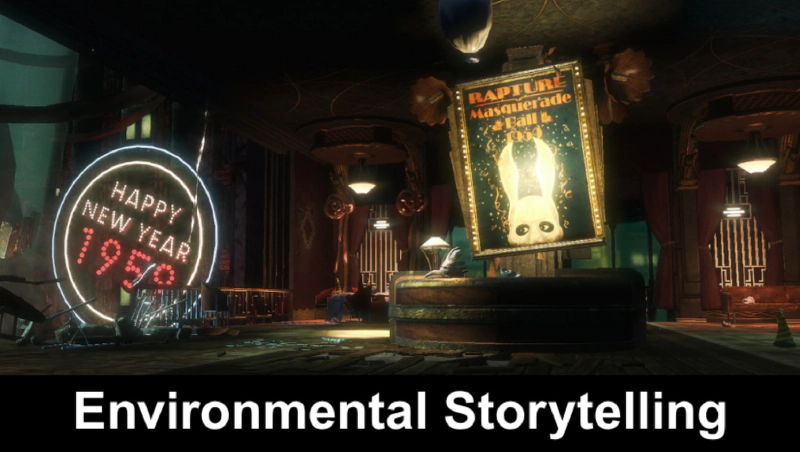
I think a more modern term for it might also be “environmental storytelling” although that has a slightly different connotation - because that tends towards being a lot more evocative and based on ambient design decisions.
Anyways
That digression aside, I’ve been getting down the rabbit hole of what I would describe as experimental narrative gaming lately. I’m going to toss Mouthwashing on the pile, too, because while that’s not delivered in an epistolary format, there’s a LOT about that game that pushes the video game narrative envelope, in my opinion.
Which takes us back to 2017’s “A Normal Lost Phone”, which… was considered pretty groundbreaking for 2017.
What Is It?
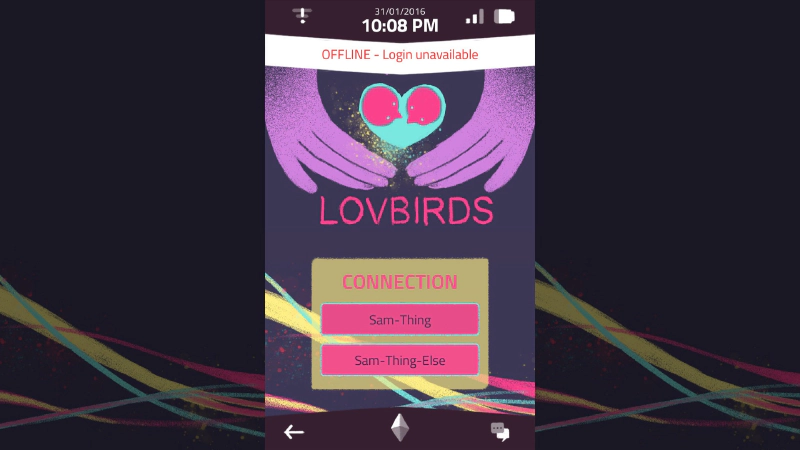
So it’s a fake phone OS without a lot of applications in it. You’ve found this phone - what happened to its original owner?
You start in a messaging app, which you can use to find the Wi-Fi password, which allows you access to your e-mail, which you can use to find the passwords for your dating app profile, which you can use to… well, you get it - each thing you find gives you the tools you need to find the next thing in the sequence until you’ve read the entire story.
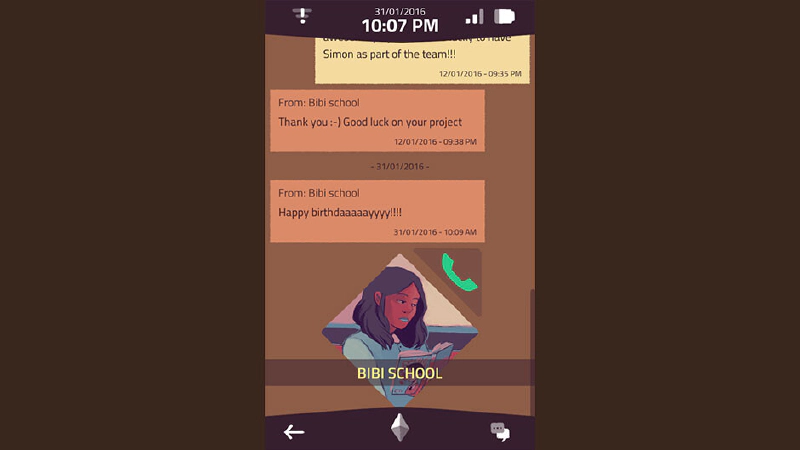
The puzzles are relatively simple, because they’re not really the point. The point is to read the story.
That puts it in conversation with Blippo+ and Hypnospace Outlaw by virtue of their also simulating a media space and telling a story within it.
It’s a Good Phone Game
I played this game on my phone, which I consider the ideal way to play A Normal Lost Phone, because … it’s a phone. The game is interacting with a phone.
The Twist is Extremely Guessable
Warning, Spoilers Ahead!
Opening the phone up and checking all of the applications on it, you basically get 3 bits of opening information:
- The missing character is named “Sam”
- Sam has two disparate profiles on the dating app “Lovbirds”
- Sam was last seen at their 18th birthday.
I’m going to give you a moment to think about these variables before we continue. Can you guess what’s going on?
code snippet start
    .
    .
    .
    .
    .
    .
    .
    .
    .
    .
    .
code snippet end
“Two profiles on dating app” can mean one of a few different things:
- Character is bi, or discovering they’re gay.
- Character is trans, and transitioning.
- Character is analytical enough to apply the principle of A/B testing to their dating (sidenote: This would have made a very different story.) .
Since this app is a critical darling and the main character is an 18-year old boy named “Sam”, my first guess was 🏳️⚧️, and lo, could have saved myself a few hours of poking around in Sam’s phone.
Writers can’t help but fall for a meaningful name: As possibly the most well-known gender-neutral name, “Sam” has got a high chance of turning out to be a trans character because it allows writers to shorten their name to “Sam” regardless of who they’re talking (sidenote: This is also why you can never trust a fictional Barry: it’s a pun when they put someone six feet underground.) .
It also makes the shocking reveal a whole lot less shocking a reveal: whoa, some of Sam’s friends thought he was Sam, but some of Sam’s other friends thought she was Sam! Still, they wrote this one very carefully so it’s not terribly obvious.
Knowing what’s definitely coming up-front made it really easy to clock the signposts in the story as they went by - little things like Sam’s dad insisting that Sam get a haircut seem innocuous but you know that’s going to turn out to have been actually really important to Sam.
Once you’ve guessed the twist, the rest becomes uncovering the details: presumably Sam’s coming out went very badly and we’re living in the aftermath. Let’s find out what happened!
Sam is Something Of a Coward
It’s a short story, covering only 2 months of Sam’s life, with scraps of evidence that let you determine Sam’s ultimate fate. Sam has taken their 18th birthday gift: a motorcycle, and driven it out of her conservative home town to a new 🏳️🌈-friendly city nearby, where she’s arranged an income (as a working musician) and to stay in a LGBT+friendly shelter.
It’s a pretty solid ending, although there’s a small problem:
Sam’s parents and girlfriend both are quite conservative, and any time Sam has floated a LGBT+ acceptance balloon towards them (usually a hypothetical or a story about someone else), they’ve shot it down, hard. Sam’s father insists on a haircut so that Sam doesn’t look too feminine. There’s lots of evidence that if Sam were to come out to them, it wouldn’t go well.
So, instead of coming out to any of them, Sam has just disappeared. No note, nothing: just vanished wholly from their lives. Sam’s phone is filled with a panicked, terrified mother and father and grieving, confused girlfriend who’ve all just lost Sam.
Soon, presumably, they’re going to report Sam as a missing person. Sam has a lot of high school friends who haven’t even discovered she’s missing yet. Sam is going to make the news.
And most of what Sam’s done is a good idea: coming out to your conservative parents and girlfriend? It’s a really good idea to have an exit strategy, or even to do this from a safe place where they can’t retaliate or track you down afterwards.
I think, though, that… Sam’s gotta come out to her family. Like, normally I don’t want to intrude into a lived experience that I have no experience with, but I think I’m in the right on this one: pre-emptively ghosting your whole family is not the right move here, Sam.
Sam decides that her parents and girlfriend will never accept what she has become and decides to disappear from their lives. And Sam’s right: there’s plenty of evidence that this coming out is not going to go well. You still have to come out to your parents, Sam. You have to know that “disowned” is a better ending to this story than “disappeared”. Plus, that puts the onus on them to learn and grow.
This is just life advice for people out there: even if you expect that people will let you down, you shouldn’t treat them like they will until they have.
Sam’s mom baked her a cake to take to every single club she attended, even when she didn’t know that she was girl Sam at some of those clubs: while this is a woman with some gender essentialism to work through, she’s clearly got some skin in the (sidenote: I’ve baked my wife a handful of cakes — my cake of choice is confetti with a homemade lemon curd filling: this is not a casual task.) .
The game asks you, as your final step as the player, to erase the contents of the phone so that it can’t be used to track down Sam in her new city. I grimaced and did so, to end the game, but I was frustrated by this.
“They can never know the truth” is such a cop-out, Sam. I expected better from you.
Blippo+ and Hypnospace Outlaw Worked Better for Me
Some of the things I liked about these other stories were their comedy chops. Encountering a spot-on skewering of some primo nostalgia is funny.
A Normal Lost Phone takes itself very seriously, and it’s set in 2015, an era for which I have very little (sidenote: Not yet, at least, I still have a chance to get old enough to be like “Ha ha, remember when there was a United States of America?”) .
Blippo+ and Hypnospace Outlaw, however, both came out after A Normal Lost Phone, whose critical success may have paved the way for or even directly inspired these further epistolary narrative game experiments.
Overall, a Verdict
Ultimately I found this one kinda “meh” in the grand scheme of things. By virtue of simply being omnivorous in my media consumption and incredibly On The Internet, I’ve seen no small amount of inventive queer (sidenote: pro tip: people who feel like outsiders make art under different constraints which is one way to get stuff that’s so experimental, different and new that it ends up folded back into the wider culture by virtue of its obvious merits) , and while this is certainly an innovative wrapper, the narrative contained within was pretty mundane and at least a little bit unsatisfying. For a much weirder, darker, and more interesting story in this same vein, might I recommend I Saw The TV Glow?
p.s. (20 minutes later, at the fridge)
“I mean, Sam’s family are going to follow up on that missing motorcycle, right? Even a incompetent police officer might consider talking to some of Sam’s friends at Board Game Club, I’m pretty sure even if they don’t get Detective Columbo they’re going to figure this puzzle out before too long.”